


Choosing between a site mixer, a transit mixer and a concrete pump
Concrete equipment is chosen by pour volume, placing height and how fast the concrete must be in place. Get it wrong and you have a cold joint.
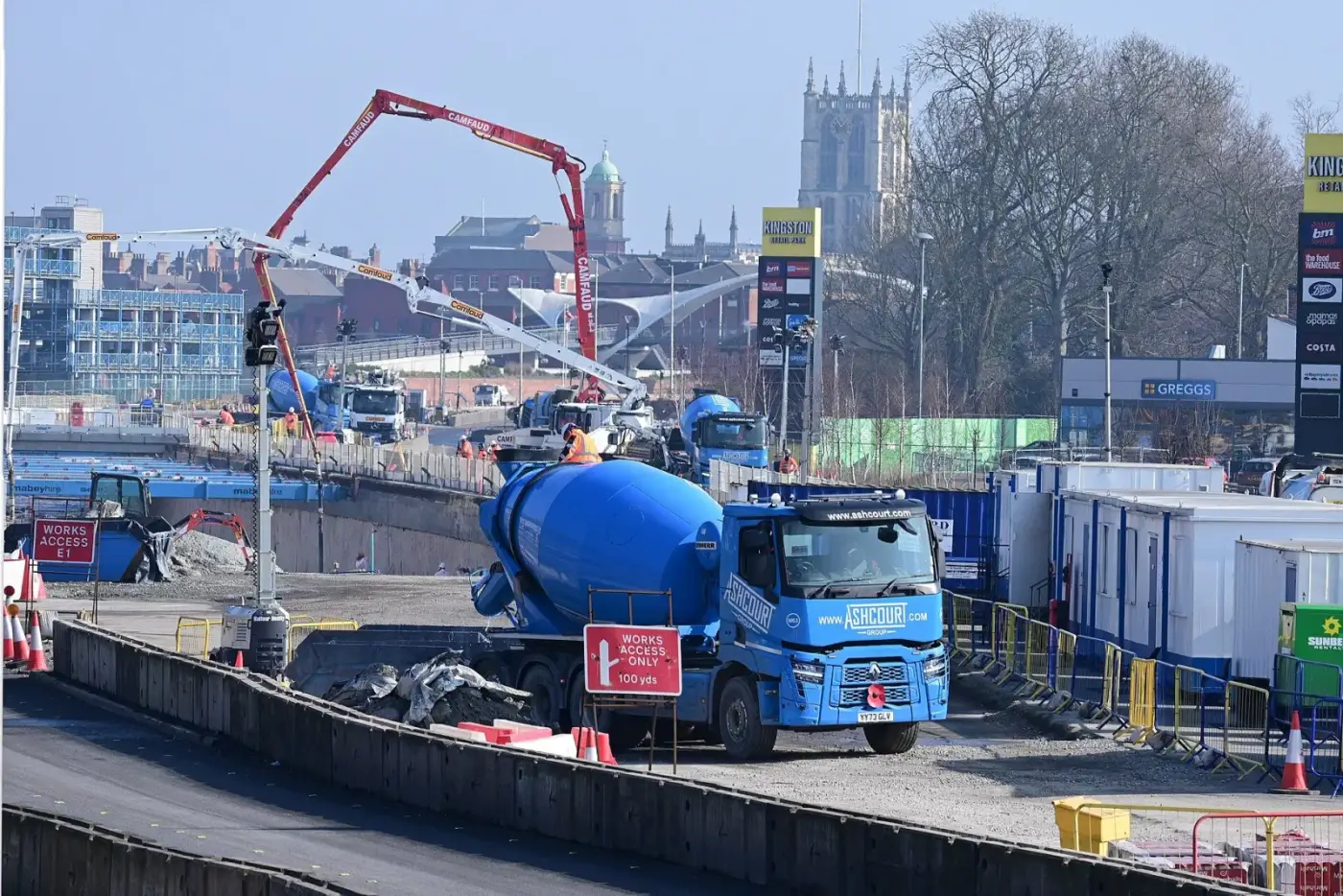
Concreting is the one operation on a building site where equipment choice is not just about cost. Get it wrong and you do not simply lose time — you lose the pour, because concrete that is not placed and compacted before it starts setting produces a cold joint you cannot undo.
Site mixers
The familiar one-bag or half-bag mixer produces roughly 1 to 3 cubic metres an hour with a decent gang feeding it. It suits small pours: footings, a small slab, plinth beams, boundary walls, repair work, and any site where ready-mix cannot reach.
Its advantages are cost and independence — no scheduling, no minimum order, and you mix what you need when you need it. Its weaknesses are consistency and output. Hand-batched concrete varies from batch to batch, quality depends entirely on the gang, and beyond about 15 cubic metres in a day you are fighting the machine.
Transit mixers and ready-mix
A transit mixer delivers factory-batched concrete, usually 6 cubic metres a load. The mix design is controlled, the strength is documented, and output is limited only by how fast the trucks arrive and how fast you can place it.
Use ready-mix for anything above roughly 10 to 15 cubic metres in a single pour, for any structural element where documented strength matters, and for any slab where a cold joint is unacceptable. The things to plan are access — a transit mixer is a large truck needing real turning space — and scheduling, because trucks arriving faster than you can place cause waiting charges, and trucks arriving slower cause cold joints. Concrete also has a working life of about 90 minutes from batching, less in summer heat, so distance from the plant matters.
Concrete pumps
A pump is not an alternative to a mixer; it is how concrete gets from the truck to the place it is needed. You need one when the pour is above ground level, far from where the truck can stand, or large enough that headpans and hoists cannot keep up.
Line pumps (stationary or trailer pumps) push concrete through a pipeline you lay out. They are cheaper, handle long horizontal distances well, and suit slabs, basements and locations a boom cannot reach. The cost is labour: someone has to lay, move and clean the line.
Boom pumps arrive on a truck with a folding placing boom, typically 24 to 47 metres. They set up in fifteen minutes, place concrete precisely anywhere within the boom\'s reach, and deliver 40 to 80 cubic metres an hour. They cost more per hour and need clear space to set outriggers and unfold, plus clearance from overhead lines.
Matching the equipment to the pour
- Under 10 cubic metres, at or near ground level — site mixer, or a small ready-mix load placed directly.
- 10 to 30 cubic metres at ground level — ready-mix with a line pump, or direct discharge if the truck can reach.
- A slab on an upper floor, any size — ready-mix with a pump. Which type depends on access.
- Over 50 cubic metres in one pour, or above the third floor — boom pump, with enough trucks scheduled to keep it fed.
- Columns and walls in a congested area — boom pump for placing accuracy, or a line pump with careful planning.
Planning the pour
Work backwards from the concrete. Decide the placing rate you need, then order trucks to match it — a boom pump placing 50 cubic metres an hour needs a 6 cubic metre truck arriving every seven minutes, which requires a plant close enough and a route that works at that time of day. Have the vibrators, spare vibrators, the finishing gang and the curing arrangements ready before the first truck arrives.
Have a contingency. If a pump fails halfway through a slab, what do you do? Knowing the answer before it happens is the difference between a delay and a construction joint in the wrong place.
Costs to confirm before booking
Pumps are usually quoted per pour or per cubic metre with a minimum quantity, plus mobilisation both ways and a setup charge. Confirm the minimum, the waiting charge if trucks are late, who supplies and lays the pipeline on a line pump, and who is responsible for washing out. Washout water and waste concrete have to go somewhere, and on a tight urban site that needs planning too.
On BookMyEquipment, mixers and pumps list their capacity, boom length where applicable, and the transport and minimum-hire terms on the same page, so you can plan the pour and the budget from one screen.
Related articles

How to choose the right excavator size for your site
Renting an excavator that is too big wastes money and cannot get into the site; too small and you pay for extra days. Here is how to match the machine to the job.

Crane rental checklist: 12 things to confirm before the crane arrives
A crane that arrives without the right capacity, papers or ground preparation costs you the whole day. Work through this list before you confirm the booking.

Backhoe loader vs excavator: which one does your job need?
A JCB-style backhoe does two jobs adequately; an excavator does one job extremely well. Knowing which you need saves both money and days.
